
How To Repair A Driveway: How Professionals Handle The Process
Quick Summary
A failing driveway does not always mean a full replacement. Professionals follow a clear set of steps that start with careful inspection and end with a smooth, long-lasting surface. We break down each phase so you know what to expect when you hire a skilled crew. With decades of hands-on experience, Kansas City Asphalt approaches every job with a focus on quality and fair pricing.
If you are searching for driveway repair services In Kansas City, MO, it helps to understand what real pros do differently. Many people think driveway repair is just filling cracks, but the process runs much deeper. We look at the entire surface, the base, and the drainage before we ever pick up a tool. That careful upfront work is what keeps a repair looking great for years instead of months.
Our family-owned company has been doing this for decades, and we believe an educated customer gets the best results.
The Professional Inspection Phase
Before any work begins, we walk the driveway slowly and mark every trouble spot. We check for:
Cracks that follow a pattern, which often point to base failure
Potholes with rough edges and loose material
Low spots where water collects after rain
Edges crumbling away from grass or curbs
Each of these signs tells a different story. A few isolated cracks can be fixed quickly, but spiderweb cracking usually means the gravel base underneath has weakened. We also examine how water flows across the driveway. Poor drainage is a top reason repairs fail, so we plan ways to move water away from the new surface. This inspection shapes the rest of the job.
How Professionals Repair Small and Medium Damage
For damage that has not spread across the whole driveway, we use a method called patching. First, we saw-cut around the broken area to create clean, straight edges. Then we remove the old asphalt and any soft soil beneath it. Fresh gravel is added, compacted in layers, and topped with hot asphalt mix.
The final step is rolling the patch until it is smooth and level with the surrounding surface. This process locks the new material in place and prevents water from creeping underneath.
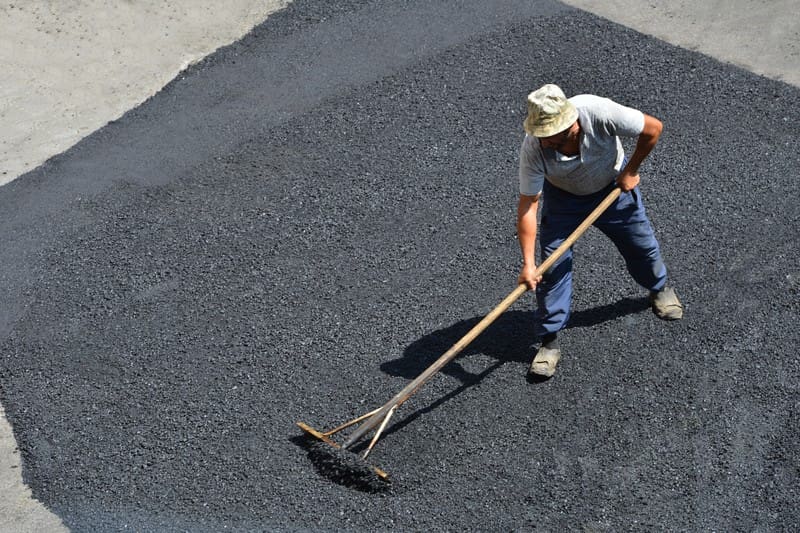
If the driveway has wider surface wear but a solid base, an overlay may be the answer. We clean the existing asphalt, apply a tack coat to help the new layer bond, and then spread a fresh layer of hot mix over the top. The result looks brand new and adds real strength to the driveway. Both patching and overlays are cost-effective ways to extend the life of your pavement.
Tackling a Full Replacement
When the base has failed completely or the driveway is sinking in multiple spots, we recommend starting over. A full replacement means removing all the old asphalt and digging down to stable soil. We build the base back up with compacted gravel, checking for proper slope at every stage.
Then we pave the new asphalt in lifts if needed, making sure each layer bonds tightly. This approach fixes the root problem and gives you a driveway that can handle Kansas City’s freeze-thaw cycles for decades.
Because we also provide commercial asphalt paving, our crews bring that same level of rigor to residential driveways. The same base preparation, the same attention to compaction, and the same high-grade materials.
Cleanup, Curing, and Final Walkthrough
After the asphalt is laid and compacted, the job is not over. We clean up all debris and remove any equipment. Then we walk the finished driveway with you to answer questions and point out how water will drain. Curing time matters a great deal.
We ask you to keep vehicles off the new surface for at least 48 hours so the asphalt can harden properly. Rushing this step can cause ruts and scuffs. We leave you with simple aftercare tips so your driveway stays strong for the long haul.
Edge Support and Sealing Joints
One detail pros never skip is paying attention to the driveway edges. Where asphalt meets a garage floor, sidewalk, or concrete curb, we install a neat joint that allows for slight movement without cracking.
Filling these seams with a flexible sealant stops water from sneaking underneath. We also add extra compaction along all edges to keep them from breaking off under the weight of turning tires. Solid edges make the whole driveway look sharp and last longer.
Matching New Work to Existing Surfaces
When we patch or overlay just a section, color matching can be a real concern. Fresh asphalt looks darker, but within a few months of sun exposure it fades to blend with the older surface. We use the same mix formula across the whole project so the transition stays smooth.
If you plan to sell your home soon, a uniform driveway makes a strong first impression. This small step is part of how we deliver work that looks good and performs even better over time.
Why A Professional Approach Makes a Difference
Learning how to repair a driveway correctly comes from years of doing the work and seeing what fails when shortcuts are taken. The materials are only half the story. Proper compaction, good drainage, and the right timing during dry weather all matter just as much.
At Kansas City Asphalt, the owner is on site and involved in every project. That keeps our quality high and our communication honest. We also handle parking lot maintenance, which teaches us how to build surfaces that stand up to heavy traffic. That experience benefits every homeowner we work with.
FAQs
Do I need a permit to repair my driveway?
Most simple repairs and overlays do not need a permit, but a full replacement might. We always suggest checking with your local city office before the project starts. Our team can help you figure out what your area requires.
How long does a professionally repaired driveway last?
With proper base work and drainage, a patched or resurfaced driveway can last 10 to 15 years or more. A full replacement, done right, often lasts 20 to 30 years. Regular upkeep, like filling small cracks early, helps it reach that top end.
Can a professional fix a driveway in cold weather?
Cold weather makes asphalt harder to work with because it cools too fast. We schedule jobs for warmer months when the temperature is right. If winter damage pops up, we can do a temporary patch and come back for a permanent fix when the weather breaks.