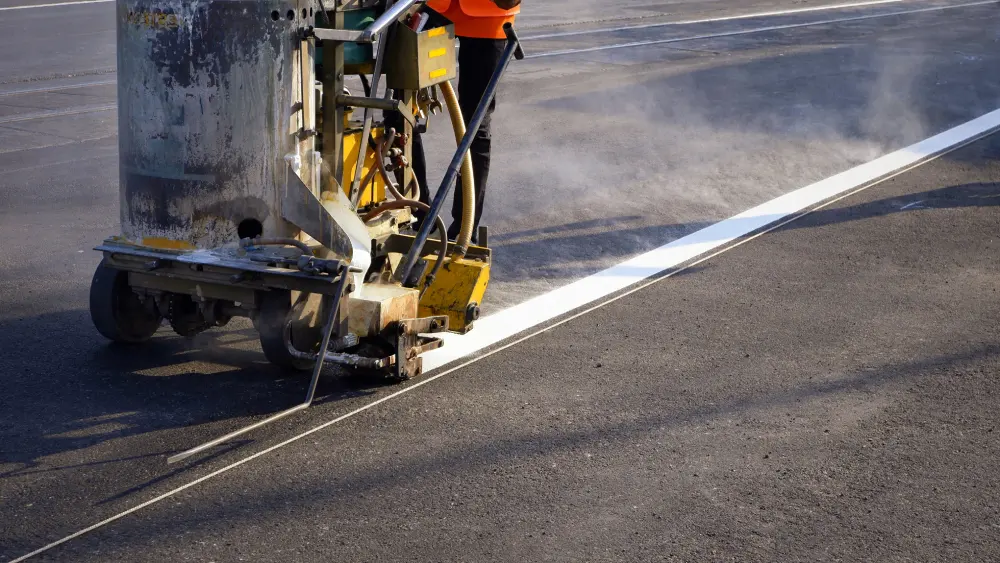
Commercial sealcoating equipment used for professional applications
Quick Summary
The difference between a sealcoat job that lasts and one that peels in a year often comes down to the equipment. Professional applications need spray systems, mixing tanks, and prep tools that apply sealer at the right thickness and pressure. Professional commercial sealcoating equipment applies sealer evenly, improves durability, and helps asphalt withstand traffic and weather for longer.
A fresh sealcoat protects your asphalt from water, sun, and chemicals. But the quality of that protection is not just about the mix. The tools used to apply it matter just as much. Commercial sealcoating equipment is built to handle large areas fast while keeping the coat even and consistent.
A solid plan for parking lot maintenance should always include a professional sealcoat, and the gear we bring is what makes that coat stick for years. We will show you the main equipment pros rely on and why each piece matters.
Spray Systems: The Heart Of The Operation
The most important piece of gear on any professional job is the spray system. These rigs let a crew cover thousands of square feet in a day while keeping the application smooth and even.
A spray system consists of a large tank, a powerful pump, and a wand with interchangeable tips. The pump pushes sealer through the hose at steady pressure. The tip controls the fan width and flow rate. This lets the operator apply the exact thickness needed without streaks or puddles.
Most commercial rigs are skid-mounted units on a trailer or truck bed. Tank sizes range from 100 to 500 gallons. A bigger tank means fewer refill stops. Agitation systems inside the tank keep sand and solids from settling. Without proper agitation, the mix becomes uneven and the application suffers.
Mixing Equipment: Getting The Batch Right
Sealer comes as a concentrate that needs water and additives mixed in before it hits the pavement. A clean, consistent mix is the foundation of a good job. Pros use powered mixers, not shovels.
A high-shear mixer attaches to a large drill motor and spins fast enough to break up clumps into a smooth liquid. For bigger batches, hydraulic mixing systems built into the spray rig do the work. The operator adds bags of concentrate, water, and sand directly into the tank and mixes on site. Getting the mix right means the sealcoat bonds well, dries even, and wears evenly over time.
Squeegees And Brushes: Finishing The Edges
Spray systems cover open areas fast, but edges, curbs, and tight spots need a different touch. Pros use wide rubber squeegees and push brooms to work sealer into the surface by hand around islands, planters, and building edges. A squeegee crew follows the spray operator, cleaning up overspray and making sure edges get full coverage. This hand work is what gives a finished lot its clean, sharp look.
Crack Cleaning And Prep Tools
Sealcoating over dirty, debris-filled cracks is a waste of time and material. The sealer will not bond. That is why prep equipment is just as important as application gear. Crews use crack routers to widen and clean out cracks before filling them.
Backpack blowers and power sweepers clear the lot of dust, leaves, and gravel before a single drop of sealer hits the ground. A clean surface is a sticky surface. Skipping prep is the fastest way to early failure.
Why Professional Grade Equipment Matters
Sealer is thick and heavy. It is not paint. Applying it with light-duty gear leads to thin spots, puddles, and an uneven cure. A patchy sealcoat job leaves parts of your asphalt exposed, which defeats the whole purpose. Professional commercial sealcoating equipment handles the weight and grit of the material.
Pumps push sealer filled with sand without clogging. Tanks hold enough volume to keep a steady pace. The result is a uniform layer that cures hard and bonds tight. When our crews arrive on site, the equipment is purpose-built for the task. We do not cut corners with undersized gear.
Why Application Method Affects Longevity
Sealer needs to go on at the right thickness, usually two thin coats rather than one thick one. Spray equipment gives the operator total control over coverage. Squeegees push sealer into the pores of the asphalt, creating a mechanical bond that spray alone sometimes misses on rough surfaces. Many pros use a two-step process. The first coat goes on with a squeegee to fill the tiny voids. The second coat goes on with a sprayer for a smooth finish.
This combo gives the deepest protection and the cleanest look. It also pushes the next application further out. Our sealcoating services follow this method because we have seen that it simply holds up longer than a quick, one-pass spray job.
Planning For A Professional Application
When you are ready to have your lot sealed, knowing what to expect helps you plan. A professional crew shows up with a trailer-mounted rig, blowers, crack tools, and safety gear. They clean the lot, fill cracks, mix sealer on site, and apply it in stages. A typical commercial lot can be sealed and ready for light traffic in a day.
At Kansas City Asphalt, we make the process simple. You deal directly with the owner from start to finish. We walk the lot with you, mark areas that need extra attention, and schedule the work at a time that least disrupts your business.
Our comprehensive road & asphalt paving services cover everything from crack repair to full resurfacing, so we can handle any issue we find during prep. That is the kind of full service you get from Kansas City Asphalt.
FAQs
Can you use a home improvement store sprayer for a commercial lot?
No. Homeowner-grade sprayers are not built for the heavy solids in commercial sealer. They clog, lose pressure, and apply an uneven coat. The job will take much longer and will not last.
How long does the equipment last?
With proper cleaning, a commercial spray rig can last a decade or more. The key is flushing the system with water and cleaning agent after every use. Sealer hardens fast, and if it cures inside the pump or hoses, it can destroy the equipment.
Is a spray application better than a squeegee application?
They work best together. A squeegee pushes sealer deep into the surface texture. A sprayer gives a uniform, smooth top coat. Many pros use both methods on the same job for the strongest bond and the best appearance. The combination is the standard for high-quality commercial work.